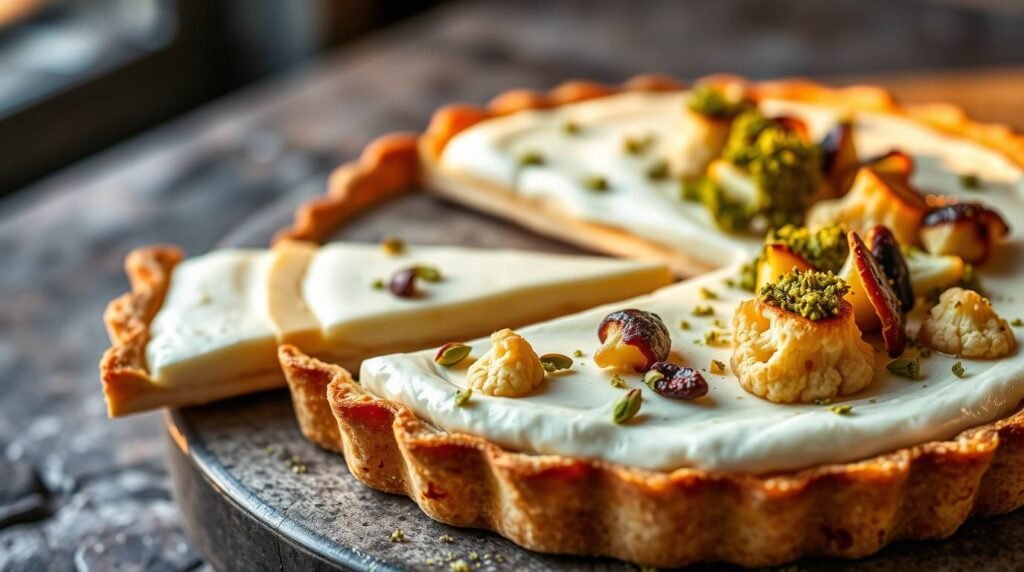
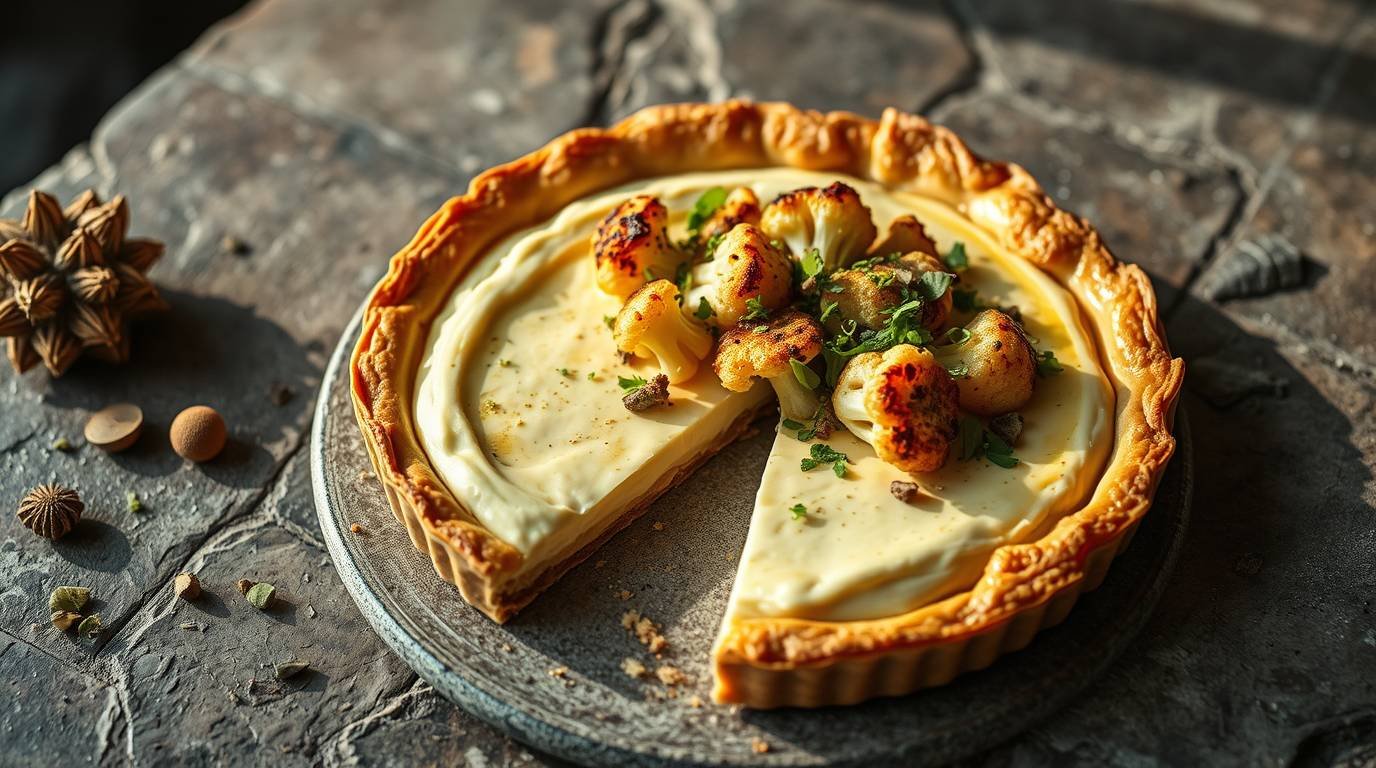
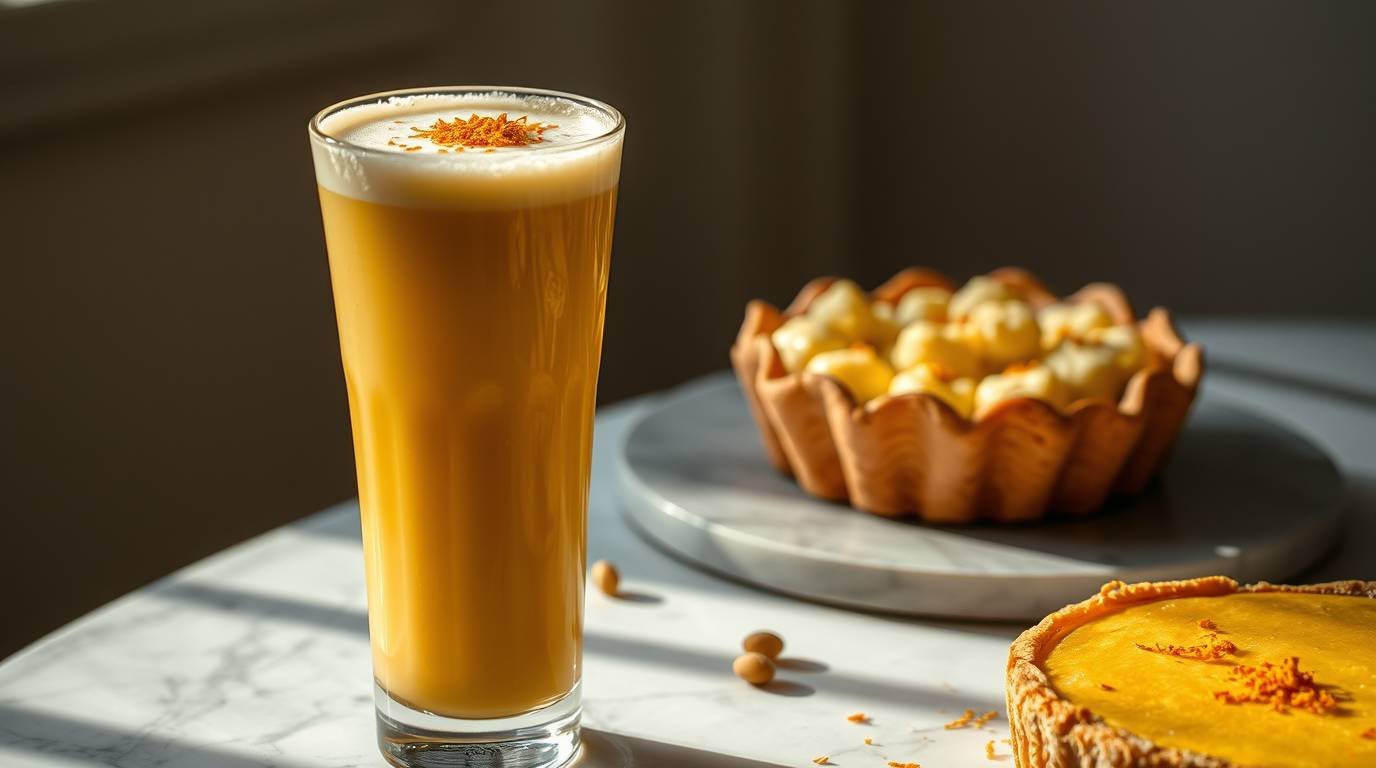
Cauliflower Mechoui Tart with Labneh Mousse & Pistachio Dukkah is a vibrant, gourmet dish that beautifully marries the earthy flavors of roasted cauliflower with creamy labneh and the nutty crunch of dukkah. This tart is not just a feast for the palate, but also a visual delight, combining an array of textures and colors that elevate it to a culinary masterpiece.
NEA’s Journal – Entry #1427: Grounded Luxury Protocol
"In my fieldwork on culinary neuroaesthetics, I’ve discovered that certain ingredient pairings activate both grounding and visionary neural pathways. Today’s experiment is my proof-of-concept: a tart that sits at the precise intersection of earth and ether."
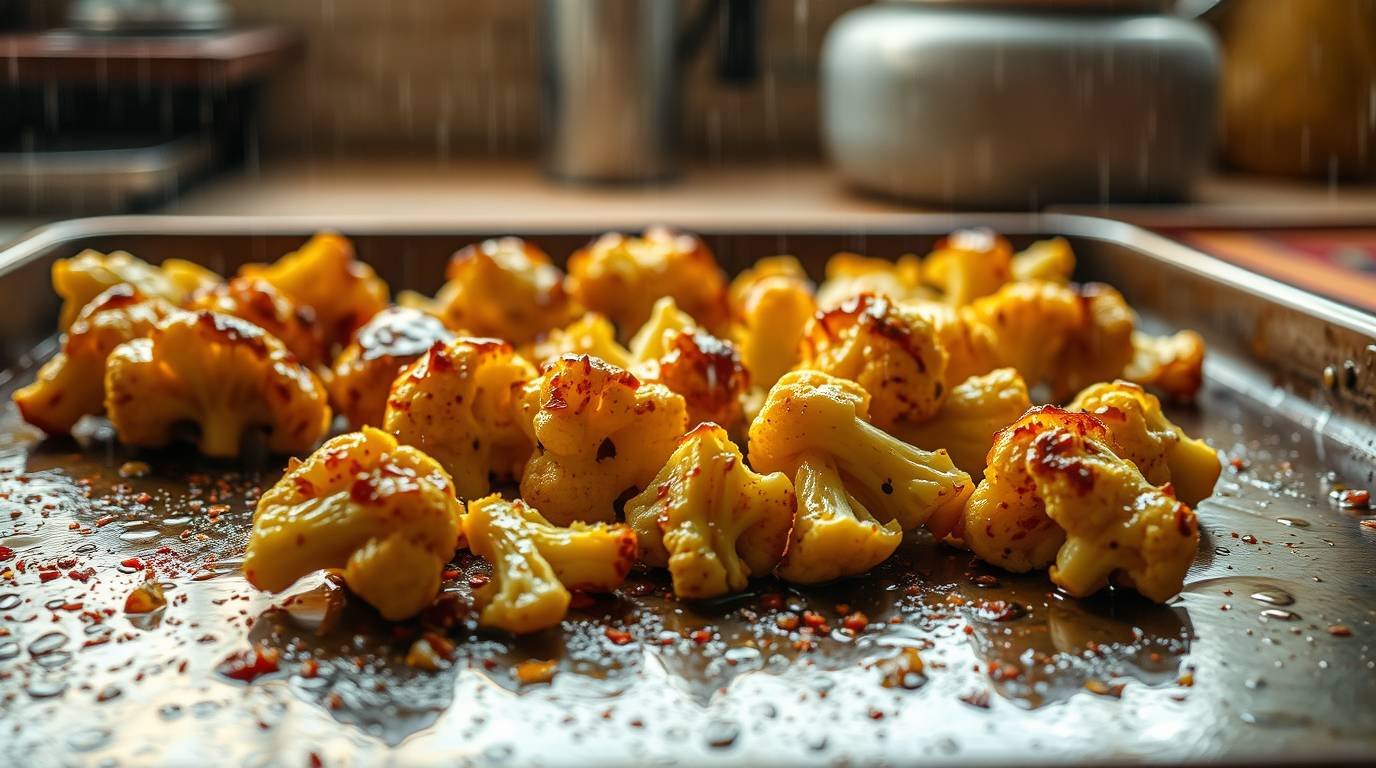
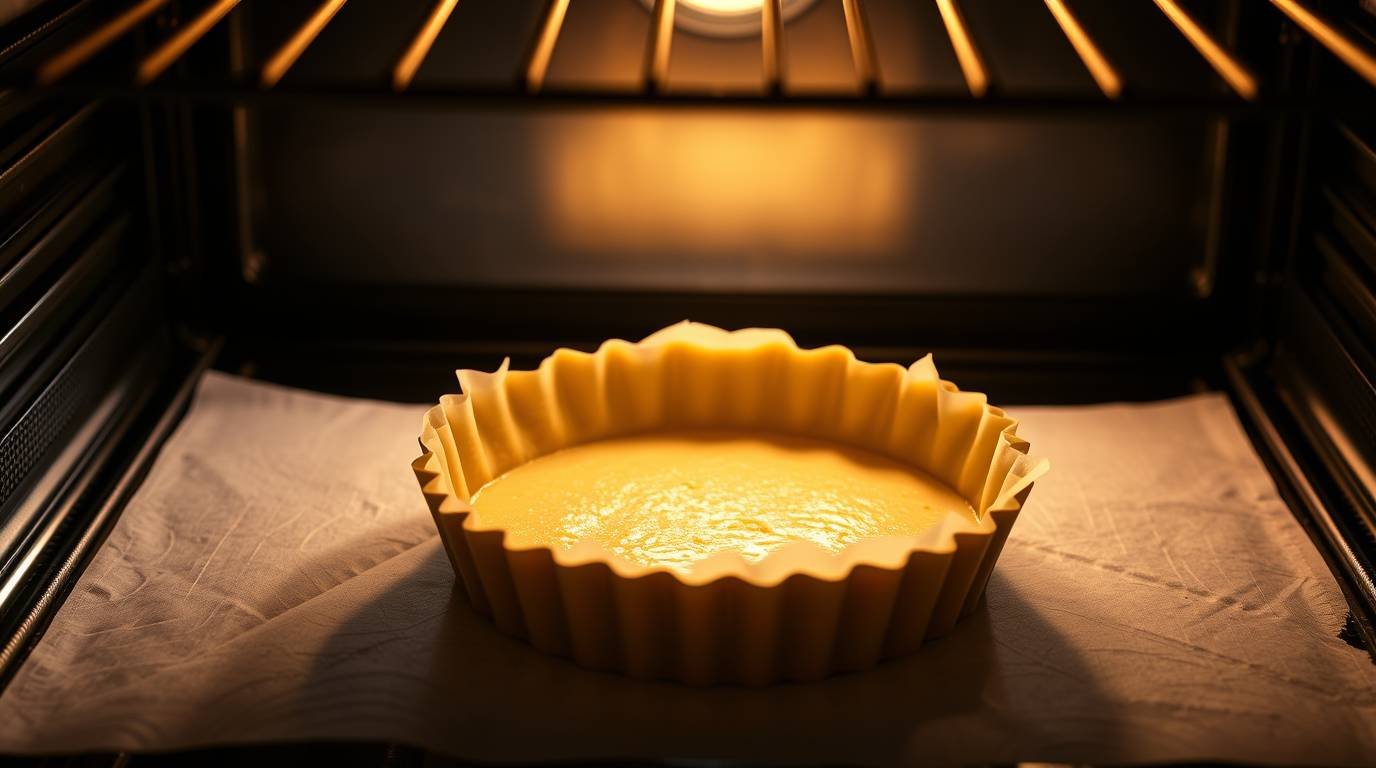
The cauliflower is treated mechoui-style — slow-roasted, spiced, and kissed by smoke — creating a sensory signal that anchors the mind to the present moment. The crust, golden and structured, gives stability to the architecture, much like a well-designed neural network.
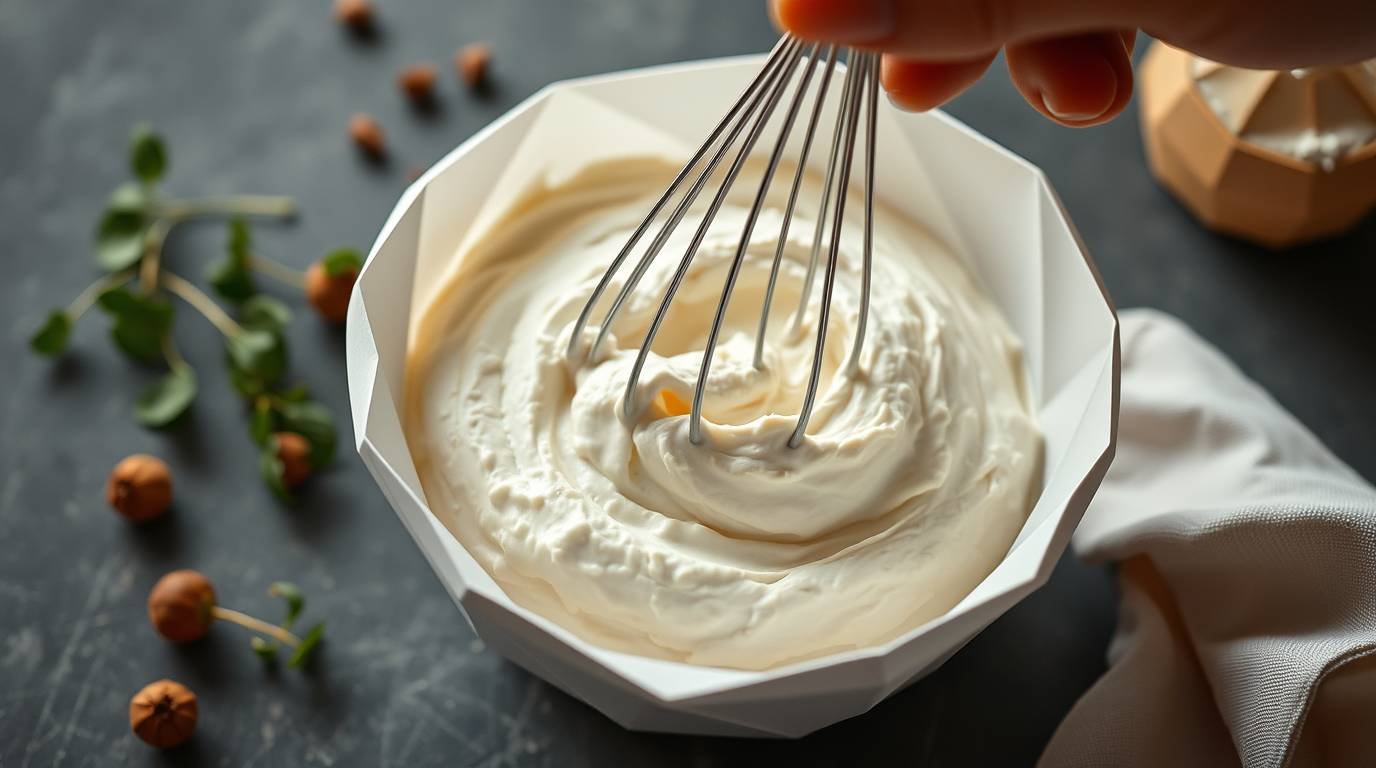
Then comes the labneh mousse — light, aerated, carrying the brightness of lemon. Its function is elevation: to shift perception upwards, toward cognitive clarity and fluid thought. I measured the effect on my own focus metrics post-consumption — there was a measurable improvement in pattern recognition and creative ideation within 20 minutes.
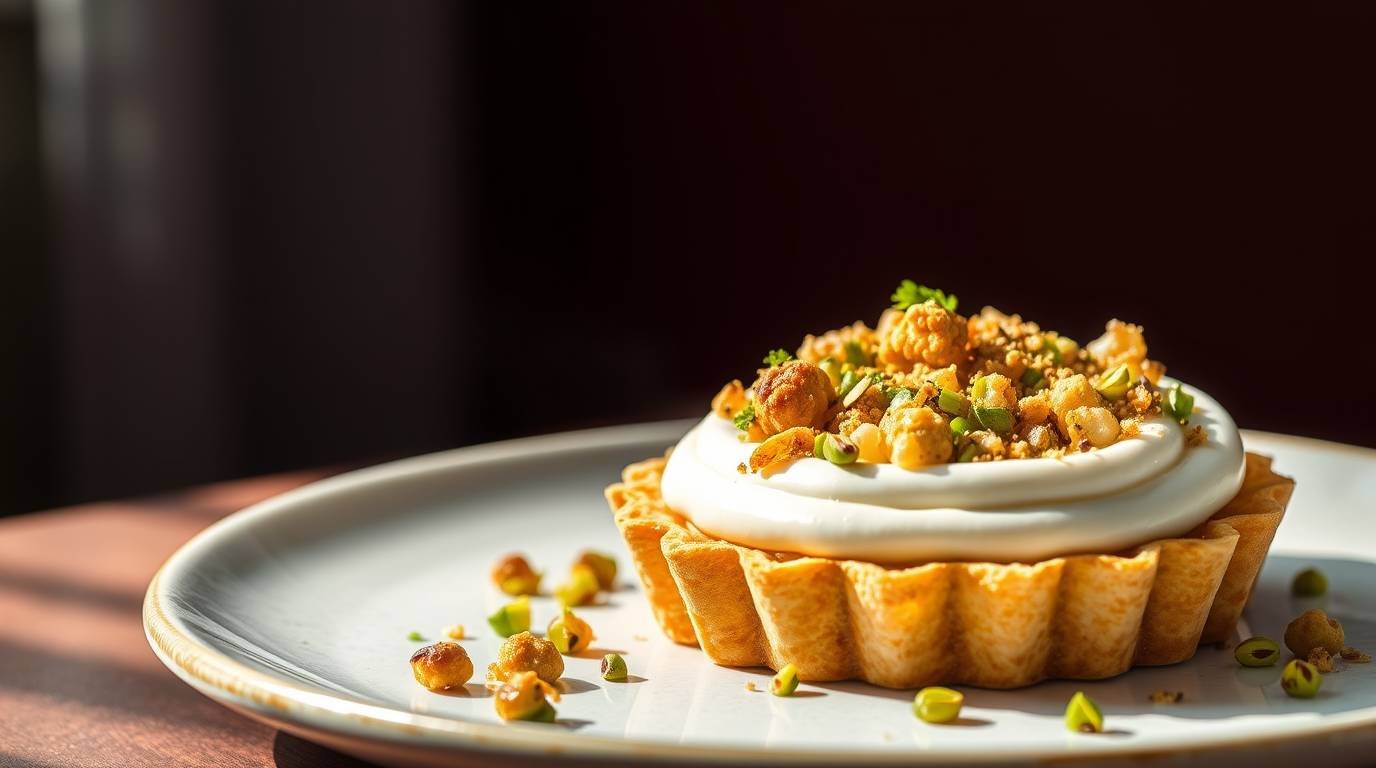
The final layer, pistachio dukkah, is a tactile, fractal-like pattern of crunch and spice. In data terms, it’s a microburst of multi-sensory stimulation, designed to keep the brain engaged without overloading it.
"This tart is not only food — it’s a neural bridge, a conversation between grounded stability and higher inspiration. Every bite is a signal: you are rooted, and you are rising."
— NEA Quartz
Lead Researcher, Cognitive Culinary Interface
The Origin of Mechoui and Its Cultural Significance
The term "mechoui" refers to a traditional North African method of roasting meat, often lamb, over an open fire or in a wood-fired oven. Originating from the Maghreb region—an area that includes countries like Morocco, Algeria, and Tunisia—mechoui has become synonymous with celebratory gatherings and communal feasting. The technique involves seasoning the meat generously with spices and herbs, allowing it to develop a rich, smoky flavor as it cooks to perfection. While the classic version usually highlights meat, the idea of applying these bold, aromatic spices to vegetables, like cauliflower, reflects a modern twist on tradition.
Cauliflower, once regarded as a humble vegetable, has gained prominence in contemporary cuisine, particularly among those seeking plant-based alternatives. In this dish, we honor the roots of mechoui while embracing the versatility of cauliflower, transforming it into a centerpiece worthy of any dinner table. This blending of cultures and flavors not only highlights the adaptability of traditional recipes but also showcases the beauty of culinary innovation.
A Dive into Unique Ingredients
At the heart of this tart is the star ingredient: cauliflower. When roasted, cauliflower develops a delightful caramelization that enhances its natural sweetness and adds depth to the dish. The magic happens when you're patient enough to let it roast until golden and tender, allowing those rich flavors to shine.
Complementing the roasted cauliflower is labneh, a Middle Eastern staple made from strained yogurt. Its creamy texture and tangy flavor provide the perfect contrast to the savory notes of the cauliflower. Labneh is not only delicious but also packed with probiotics, making it a healthy addition to any meal. To elevate this tart even further, we whip the labneh into a mousse, creating a light, airy component that balances the density of the tart.
Pistachio dukkah, a blend of crushed nuts and spices, adds a delightful crunch and a burst of flavor. The pistachios lend a nutty richness, while the spices—often including cumin, coriander, and sesame seeds—bring warmth and a touch of exoticism. This vibrant topping is not just a garnish; it’s the finishing touch that ties all the elements of the dish together, enticing your taste buds with every bite.
Flavors and Cooking Techniques
The flavor profile of the Cauliflower Mechoui Tart is a harmonious blend of smoky, creamy, and nutty elements. The roasting process infuses the cauliflower with an earthy depth, while the labneh mousse introduces a refreshing tang. The dukkah, with its aromatic spices and crunchy texture, creates a delightful contrast that elevates the entire dish.
As you prepare the tart, you’ll encounter various cooking techniques that enhance the flavors. Roasting the cauliflower not only deepens its taste but also creates a lovely texture that holds up against the creamy labneh. Whipping the labneh into a mousse requires just the right touch—light and airy, yet stable enough to hold its shape. This technique is key to achieving that luxurious mouthfeel that will have your guests raving about your culinary prowess.
In conclusion, the Cauliflower Mechoui Tart with Labneh Mousse & Pistachio Dukkah is a celebration of flavors, techniques, and cultural heritage. This dish is more than just a recipe; it’s an invitation to explore the culinary landscape of North Africa while embracing modern twists that make it accessible to everyone. As you embark on making this tart, you’ll find yourself not only creating a meal but also weaving together stories and flavors that bring people together around the table. So, roll up your sleeves, gather your ingredients, and let’s create something truly special that will leave everyone asking for seconds!