Step 1: Define Your Goal
Before you dive into tracking, clarify what “perfect” means for you:
- Healing: Chronic pain, inflammation, or recovery support.
- Energy: More stamina and fewer afternoon crashes.
- Weight balance: Gain, lose, or maintain with ease.
- Mood & cognition: Sharper focus, stable emotions.
Once you choose your priority, AI models can fine-tune recommendations instead of throwing random tips at you.
Step 2: Track Without Wearables
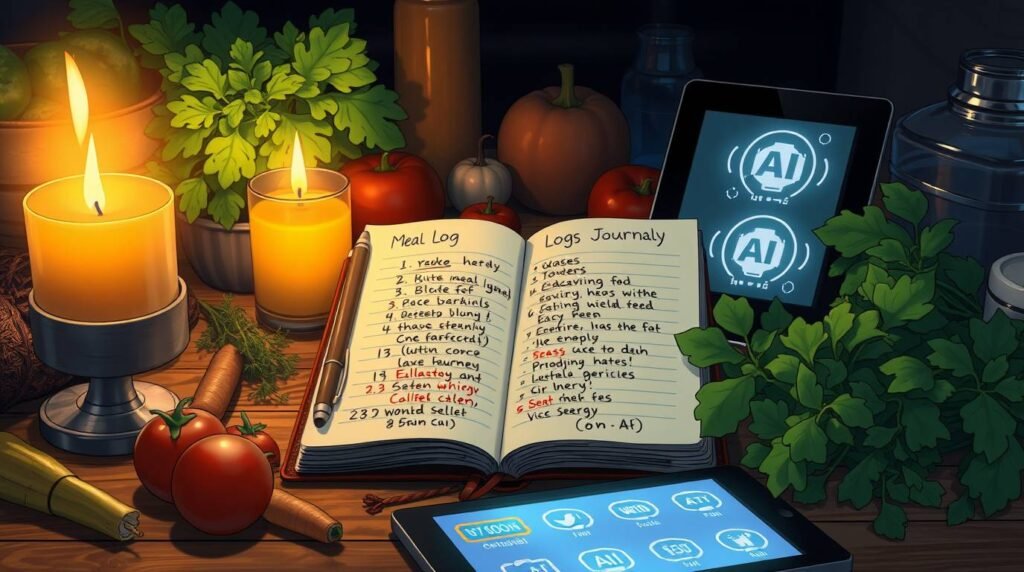
You don’t need an Oura Ring or CGM (though they help). Instead:
- Use a food & mood journal: Apps like Cronometer, Bearable, or even a Google Sheet work. Log meals, symptoms, and energy levels.
- Snapshot blood work: A simple panel (cholesterol, glucose, vitamin D, thyroid) gives AI a starting point.
- Sleep quality: Instead of a tracker, use a quick morning rating: “1–5: How rested do I feel?”
AI can take these low-cost inputs and start spotting patterns that humans might miss.
Step 3: Feed AI the Right Questions
AI shines when you ask it to connect dots. For example:
“Here’s 14 days of meals, energy ratings, and symptoms. Which foods are likely contributing to my afternoon fatigue?”
Or:
“Based on my blood work and dietary patterns, what foods should I add or reduce to improve inflammation?”
Step 4: Build Your Core Framework
The perfect diet isn’t one-size-fits-all, but here’s a modular blueprint AI can help you refine:
- Foundation: Mostly whole, unprocessed foods.
- Personal Adjustments: AI filters meals by your sensitivities (e.g., low FODMAP, dairy-free).
- Nutrient Gaps: AI suggests adding magnesium-rich greens or omega-3 sources if your blood work shows deficiencies.
- Lifestyle Layer: Adjust meal timing (intermittent fasting, small frequent meals) based on your energy logs.
Step 5: Evolve With Feedback Loops
The secret sauce: continuous refinement. AI uses your weekly logs to tweak recommendations:
- “Energy dropped after adding oatmeal? Try swapping for quinoa.”
- “Mood improved on days with higher protein? Increase intake by 10%.”
The NEA Takeaway:
The future of nutrition isn’t about buying more gadgets — it’s about smarter questions, cleaner data, and AI’s ability to see patterns we can’t. Whether you want more energy, better sleep, or deep healing, you can start crafting your perfect diet today — no ring required.